Designing Paradise: How Ancient Masters Beat the Desert Heat Without Electricity
When we think of high-end landscape architecture in Dubai’s elite villa communities, we think of sleek infinity pools, sunken seating areas, and perfectly manicured gardens. But the core engineering rules we use to build these modern oases weren’t invented in the 21st century.
Thousands of years ago, the master court architects of the ancient world were facing the exact same challenge we face today: How do you engineer a luxurious, cool outdoor sanctuary in a harsh, hyper-arid climate?
The answers they found created the foundation of luxury landscape architecture. By exploring how these ancient masters beat the desert heat, we can better understand how to design the ultimate modern backyard.
The Birth of the Chahar Bagh: Pure Geometric Luxury
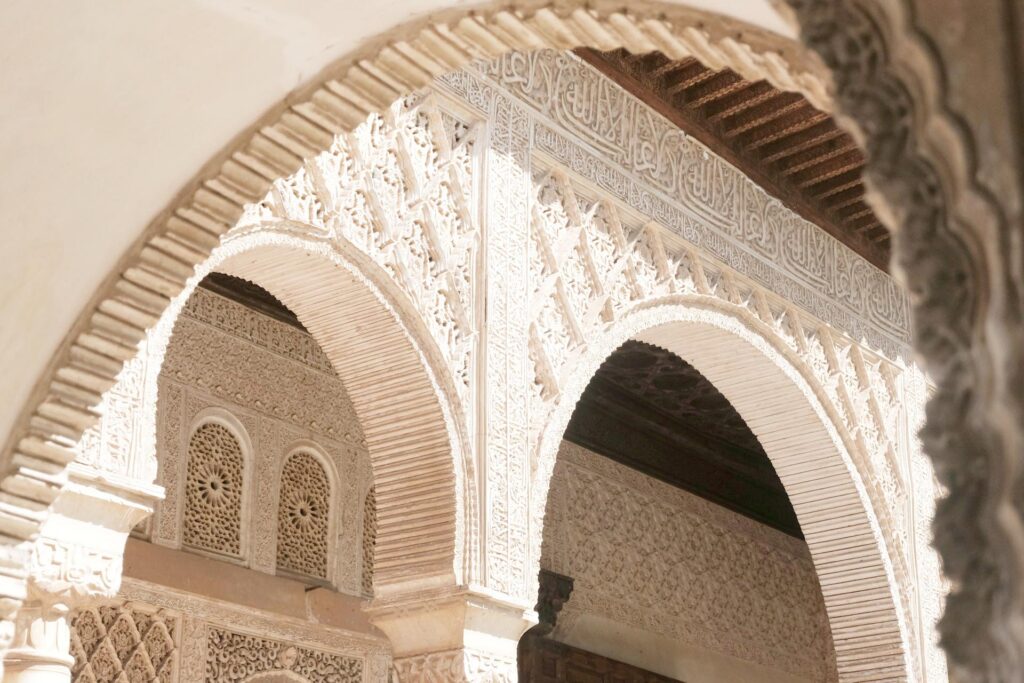
The true pioneers of hot-weather landscape design were the ancient Persian and Islamic architects. They perfected a layout called the Chahar Bagh (which translates to “four gardens”).
Instead of letting plants grow wildly, these historical visionaries used rigid, mathematical geometry to bring a sense of absolute order and calm to the desert.
The garden was split into four distinct quadrants by intersecting stone walkways and narrow water channels. At the absolute center sat a majestic, elevated pool or water pavilion.
This layout wasn’t just artistic; it was the world’s first systematic approach to outdoor spatial design. It proved that luxury landscape architecture relies on architectural symmetry, clear hardscape foundations, and water as a central anchor.
Three Ancient Secrets Behind Modern Desert Landscapes
Ancient courtyard architects didn’t have electric cooling systems or automatic pool pumps. They relied entirely on physics, materiality, and structural design to lower temperatures and create an elite lifestyle experience.
1. Water Channels as Natural Air Conditioning
In ancient palaces, water was never static; it was always moving. Architects built narrow, shallow stone channels that carried water throughout the entire garden. As dry desert winds blew across these moving channels, the water evaporated, naturally dropping the ambient air temperature of the courtyard by several degrees.
Today, we use this exact concept of evaporative cooling when we position custom luxury overflow pools upwind from a villa’s main outdoor living pavilion.
2. High-Sided Walls for Microclimate Shade
Ancient luxury courtyards were completely enclosed by high, beautifully finished masonry walls. By calculating the movement of the sun, architects built these walls to cast massive, reliable shadows across the living spaces during the hottest hours of the day. This trapped cool air inside the courtyard and kept scorching desert winds out.
Modern landscape architects use the same theory when designing custom pergolas, vertical green walls, and structural privacy barriers for Dubai villas.
3. Materiality That Repels Heat
The master builders of the past knew that selecting the wrong stone would turn an outdoor terrace into an oven. They specified smooth, light-colored stones like marble and high-quality limestone. Because these materials have a high albedo (reflectivity) rating, they bounced sunlight away instead of absorbing it, keeping the ground cool enough to walk on barefoot.
Ancient Wisdom Meets Modern Engineering
Translating ancient architectural principles into modern villa living requires partnering with certified swimming pool construction companies in UAE. Modern builders apply historic geometric ratios and evaporative principles while integrating high-efficiency chillers, smart automation, and advanced structural engineering.
Understanding your total swimming pool construction cost in Dubai means evaluating how structural water channels, heat-reflective paving, and energy-efficient hydraulic systems contribute to your property’s long-term value and operational efficiency.
Once built, preserving the ancient aesthetic of pristine moving water demands ongoing care. Engaging a dedicated pool service in Dubai keeps specialized water channels, hidden balance tanks, and filtration pumps operating flawlessly against harsh desert dust and ambient heat.
The Modern Takeaway for Dubai Villa Owners
The lesson from history is clear: A spectacular garden is engineered, not just planted. True luxury landscape architecture is a flawless balance between hardscape masonry, smart fluid dynamics, and softscaping.
When you sit out by an architectural pool, sheltered by structured shade, walking on stone that stays cool under the midday sun, you aren’t just enjoying a modern backyard. You are experiencing a design philosophy that royal court architects perfected thousands of years ago to shape modern villa design.
Thinking of transforming your villa’s outdoor layout? At Lushly Pools, we combine ancient geometric harmony with cutting-edge engineering to design and build bespoke courtyards, smart pools, and high-end landscape architecture in Dubai.
Contact our design team today for a consultation on your villa transformation.