The Complete Step-by-Step Guide to Fixing Concrete Leakage with Professional Swimming Pool Repair Services
Dealing with a water leak in an already built backyard pool can be a major headache for any villa owner. If your water level drops rapidly, you need expert swimming pool repair services before structural damage worsens. Regular pool maintenance and weekly cleaning keep your water clear, but structural cracks require specialized technical care.
Leaving a leak unaddressed can wash away the surrounding soil and ruin your entire villa landscaping.
Here is the exact engineering process top teams use to detect, strip, waterproof, and retile a leaking concrete pool in Dubai.
Step 1: How to Find the Exact Location of a Pool Leak
Before breaking any tiles, your team must confirm if the leak is in the plumbing lines or the concrete shell.
The Bucket Test for Evaporation
Fill a plastic bucket with water and place it on the pool steps. Mark the water level inside the bucket and outside on the pool tile. Wait 24 hours. If the pool water drops much faster than the bucket water, you have a definitive leak.
Pressure Testing and Dye Testing
A professional swimming pool repair services team will pressure test the pipework to check for underground pipe breaks. If the pipes are secure, we use a specialized colored dye near visible tile cracks. The structural leak will naturally suck the dye into the shell, showing us the exact failure point.
Step 2: Stripping the Old Materials Down to Raw Concrete
To fix a leak properly, you cannot just apply patches over old finishes. You must strip the pool down completely.
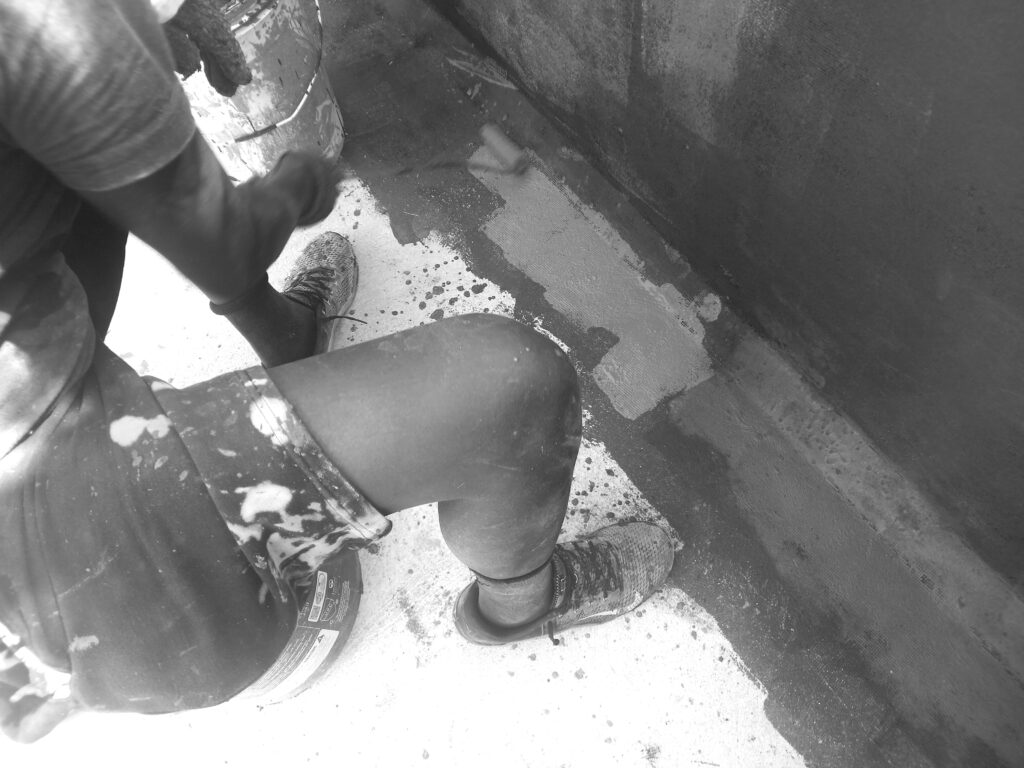
Removing Existing Tiles and Plaster: Workers use pneumatic chipping hammers to carefully remove the old mosaic tiles. Next, they chip away the old pool plaster layer entirely. This step requires precision so you do not puncture the structural concrete wall underneath.
Removing Old Waterproofing: Once the plaster is gone, the raw concrete surface is sandblasted or mechanically grinded. This process completely removes the old, failing waterproofing membrane, leaving behind a clean, rough, and solid concrete surface ready for new materials.
Step 3: Repairing Cracks and Applying New Plaster Base
Once the concrete shell is exposed, any visible structural cracks are chiseled out into a clean V-shape format.
Filling the Structural Cracks
We pack the V-shaped cracks using an advanced hydraulic water-stop cement like Mapei Mapegrout. This material expands as it cures to block active water leaks instantly.
Proper Re-Plastering Thickness
Raw concrete or gunite is much too rough for a delicate waterproofing layer. Therefore, we apply a smooth cementitious plaster layer at a precise thickness of 10mm to 15mm. This creates a perfectly flat canvas and protects your final finishes from being punctured.
Step 4: Applying Advanced Two-Component Waterproofing with Mesh
Once the new plaster base is fully cured, it is time to build the ultimate watertight barrier.
The First Waterproofing Layer: We apply a premium, flexible, two-component cementitious waterproofing slurry like Mapei Mapelastic or Fosroc Brushbond. This first heavy coat creates our primary water barrier.
Embedding the Fiberglass Mesh: While the first coat is still wet, we embed a heavy-duty fiberglass mesh matrix into the material. This mesh adds incredible structural strength and prevents future shifting or cracking.
The Second Waterproofing Layer: Finally, we apply a second layer of Mapei Mapelastic directly over the fiberglass mesh. This creates a highly durable waterproofing sandwich that prevents any future water loss.
Step 5: Attaching New Mosaic Tiles with Elite Adhesive
The final step is installing the new mosaic tiles using materials that can withstand constant water immersion.
Choosing the Right Tile Adhesive: Never use standard tile glue for a swimming pool layout. We use premium, high-performance polymer-modified adhesives like Mapei Kerabond T mixed with Isolastic, or Webercol Phone. This premium mixture ensures your mosaic tiles stay locked in place for decades.
Applying Grout and Refilling: After the tile adhesive dries, we fill the joints using water-resistant epoxy grout like Mapei Kerapoxy. Epoxy grout resists pool chemicals, prevents algae growth, and blocks water absorption completely.
Comprehensive Shell Care & Structural Asset Renewal
When facing complex hydraulic loss or concrete degradation, engaging experienced custom swimming pool design companies and pool engineering services in Dubai ensures that structural restoration aligns with original load calculations.
Executing a full swimming pool restoration in Dubai protects your villa’s foundation, stabilizes surrounding deck pavers, and restores your pool to factory-grade watertight standards.
Why Rely on Professional Cleaning Services Dubai?
Trying to balance chemicals or fix leaks yourself during a scorching summer can be frustrating and dangerous. Working with established maintenance companies Dubai respect ensures your pool is handled by trained technicians who use industrial-grade testing kits.
Skilled teams providing cleaning services Dubai homeowners count on know exactly how to treat sudden water cloudiness before it turns into a costly problem. This keeps your home running smoothly and keeps your family safe.
Protect Your Investment with an Annual AMC
The best way to prevent major leakages is through early detection and consistent care. Signing up for yearly AMC services ensures that certified technicians check your pool shell and water levels every single week.
At Lushly Pools, we provide the most reliable swimming pool repair services and pool maintenance plans in the UAE. Our engineering team handles the entire leak repair process with full structural guarantees.
Fix Your Pool Leak Today: Stop wasting money on constant water top-ups. Contact our cleaning services Dubai team today to book your summer care package!